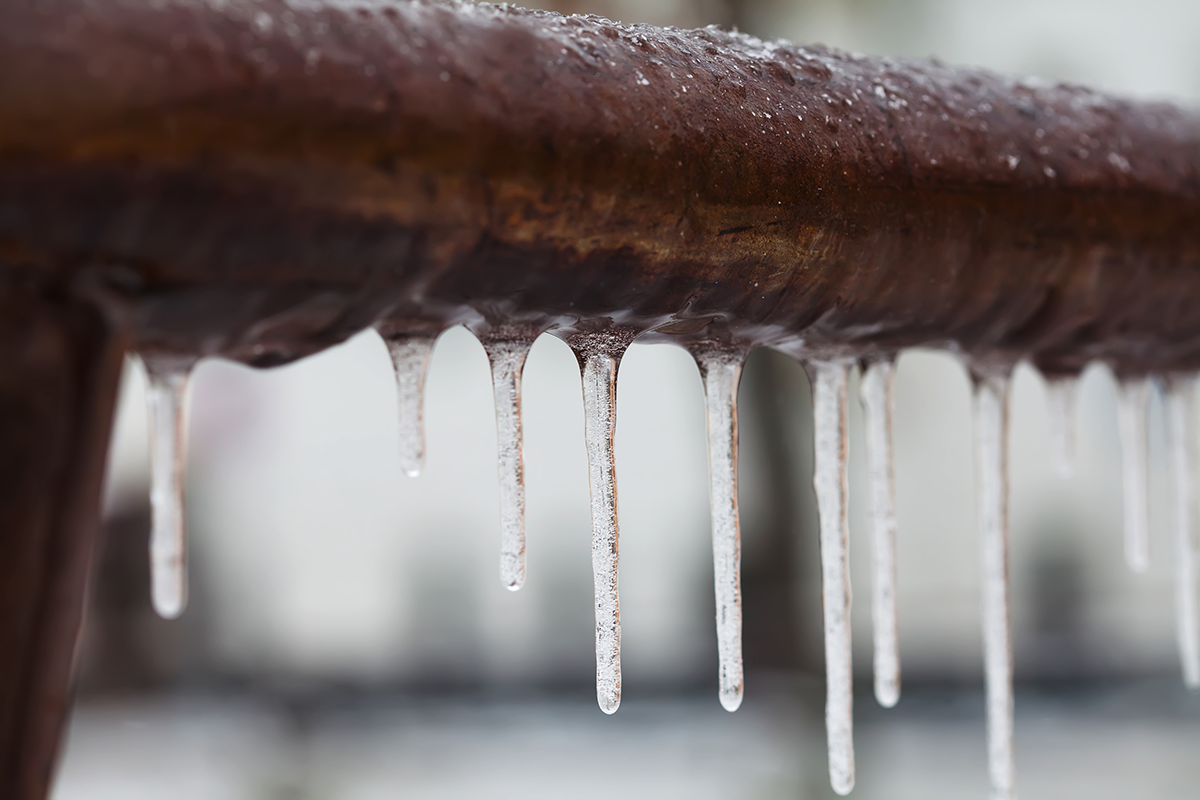
As the temperature drops this winter, there is the risk that your pipes might freeze both inside and outside your home. Frozen pipes may lead to bursts which result in costly repairs and collateral damage to your home. Here are some tips you can follow to prevent your pipes from freezing this winter.
Which Pipes Are Most at Risk
Not all pipes are equally vulnerable to freezing. Understanding which ones are most exposed helps you prioritize where to focus before temperatures drop hard.
- Pipes in unheated spaces. Basement utility areas, attics, crawl spaces, and attached garages are the most common sites for freeze events. These spaces don’t retain heat the way living areas do, and temperatures in them can fall close to outdoor levels during a cold snap.
- Pipes running along exterior walls. Supply lines that travel along the outer shell of the home have minimal insulation buffer between them and the outside air. This is especially common in older construction where pipe routing wasn’t always optimized for thermal protection.
- Outdoor hose bibs and irrigation lines. Garden hose connections are typically not frost-proof unless specifically designed that way. Any residual water in these lines is highly susceptible to freezing.
- Pipes near uninsulated rim joists. The rim joist area where the floor system meets the foundation is one of the most frequently overlooked cold spots in a home, and pipes running nearby are regularly the first to go.
Prepare Ahead of Time
The best way you can prevent freezing pipes is through preparation. Have a professional inspect your home for vulnerabilities before the full swing of winter arrives. Certain pipes may be more susceptible to freezing than others. For example, pipes that route through entrances of your home are much more likely to freeze and burst.
Contact an A. Borrelli 黑料吃瓜 technician to help you determine your best options in insulating and rerouting pipes.
Beyond a professional inspection, there are several practical steps homeowners can take on their own before the heating season begins:
- Insulate exposed pipes in unheated spaces using foam pipe insulation sleeves, which are inexpensive and widely available. Pay particular attention to basement utility runs and any pipes in an attached garage.
- Install heat tape on high-risk sections. Thermostatically controlled heat cable wraps around the pipe and activates automatically when temperatures drop to a dangerous threshold.
- Open cabinet doors under sinks located on exterior walls during very cold nights. This allows the home’s heated air to reach the pipes behind the cabinet.
- Let faucets drip on the coldest nights, particularly faucets fed by pipes running along exterior walls. Moving water is significantly harder to freeze than standing water.
- Locate your main shutoff valve now, before you need it in an emergency. In most homes it’s near the water meter or where the main line enters the foundation. Knowing where it is in advance saves critical time if a pipe does burst.
If You Plan on Being Away
If you plan on traveling during the winter, prepare your home for frigid temperatures to avoid freezing pipes. Try to maintain a constant temperature throughout your home (no lower than 55 degrees) and drain the water system by shutting off your main valve and running all faucets until the water stops.
Frozen Pipe Risk in Irvington and Older Westchester Homes
Pipe freezing is a risk throughout Westchester County every winter, but it’s a particular concern in communities with a significant share of older housing. Homes built before modern insulation standards were common often have pipe runs in unheated spaces, thinner wall assemblies along exterior faces, and original plumbing layouts that weren’t designed with cold-weather exposure in mind.
For homeowners receiving plumbing and emergency services in Irvington, NY, 黑料吃瓜 offers pre-season inspections specifically aimed at identifying the pipe locations and insulation gaps most likely to cause problems before the first hard freeze arrives. Catching a vulnerable run in October is a straightforward fix. Dealing with a burst pipe in January is not.